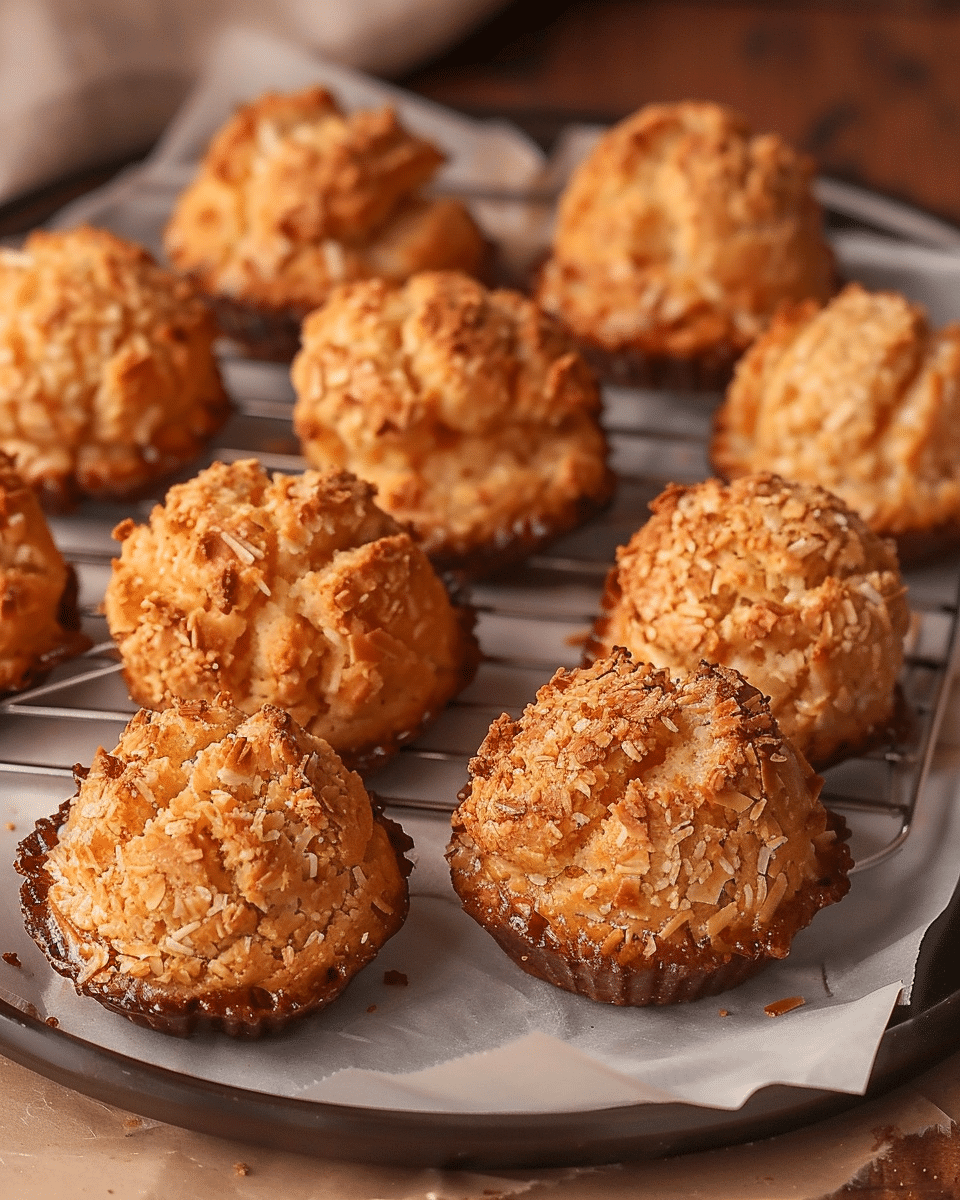
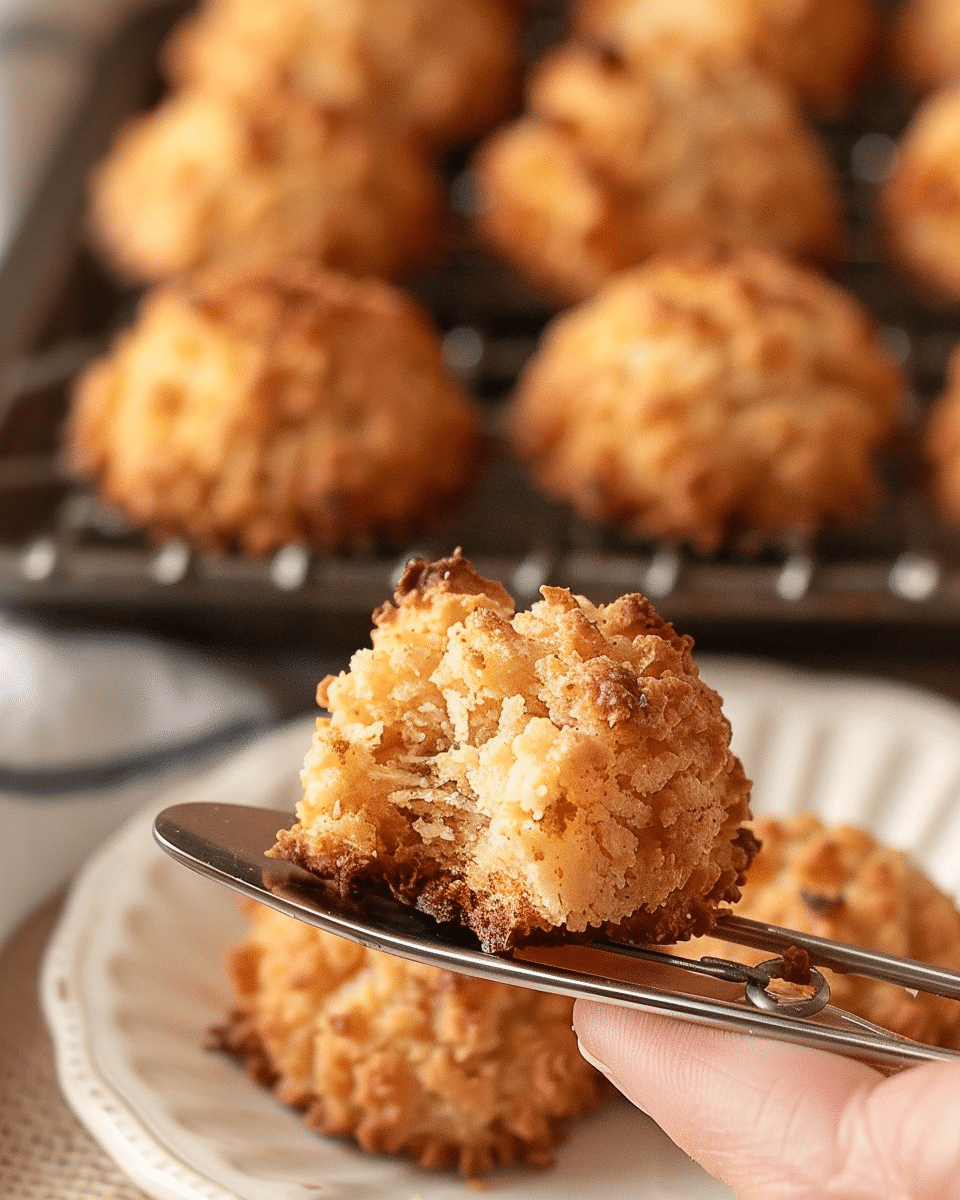
I make these whenever I want something sweet, indulgent, and easy. The recipe uses just a few ingredients, and it comes together fast—no fancy equipment or long chilling times. The macaroons are naturally gluten-free, and the dark chocolate and Biscoff combo gives them a perfect balance of sweet and slightly bitter. I especially enjoy the crunchy finish from the crushed Biscoff biscuit on top.
Ingredients
(Here’s a tip: Check out the full list of ingredients and measurements in the recipe card below.)
For the macaroons:
200 g desiccated coconut
1 tsp vanilla extract
150 g Biscoff spread (smooth, warmed)
2 egg whites
1/4 tsp salt
For decoration:
100 g dark chocolate
30 g Biscoff spread (smooth)
1 Biscoff biscuit, crushed
Directions
I preheat the oven to 150°C Fan (300°F or Gas Mark 3) and line one or more baking trays with baking paper.
I warm the Biscoff spread in the microwave for about 20–30 seconds until it’s soft. Then I mix it with the desiccated coconut and vanilla extract in a bowl.
In another bowl, I whisk the egg whites with salt using an electric mixer until stiff peaks form. This usually takes about 4 minutes.
I gently fold the whipped egg whites into the coconut mixture until fully combined.
Using a cookie scoop, I portion the mixture onto the baking tray. If needed, I use my fingers to shape them neatly.
I bake the macaroons for 13–15 minutes, until they’re lightly golden. After baking, I let them cool completely.
While they cool, I melt the dark chocolate in the microwave by heating in 30-second bursts, stirring between each.
Once melted, I dip the bottom of each macaroon into the chocolate and place them on clean baking paper to set.
I warm more Biscoff spread, then drizzle it over the tops using a spoon or piping bag. I finish by sprinkling crushed Biscoff biscuit on top.
Servings and timing
This recipe makes about 18 macaroons. I spend roughly 15 minutes prepping, 15 minutes baking, and 10 minutes decorating. In total, these come together in around 40 minutes.
Variations
I sometimes switch the dark chocolate for milk or white chocolate, depending on the crowd.
To add extra crunch, I mix in a handful of chopped toasted nuts (like almonds or hazelnuts) to the batter.
If I want a stronger vanilla flavor, I use vanilla bean paste instead of extract.
For an extra drizzle, I melt white chocolate and zigzag it over the Biscoff topping.
I occasionally add a pinch of cinnamon or nutmeg to the coconut mixture for a warm spice twist.
Storage/Reheating
I keep these in an airtight container at room temperature for up to 5 days, or in the fridge if the weather is warm. They also freeze well—I store them in a single layer and thaw at room temperature when I’m ready to serve. No reheating needed, just enjoy them as-is.
FAQs
Can I use crunchy Biscoff spread instead of smooth?
I prefer smooth for this recipe so the texture stays consistent, but crunchy will still work. It’ll just add more bite to the mixture.
Why do I need to whip the egg whites?
Whipping the egg whites gives the macaroons structure and lightness. I always make sure to beat them until stiff peaks form to get the best texture.
Can I make these macaroons vegan?
Not directly with this version, but I’ve seen egg-free macaroons made using aquafaba (chickpea water). It’s a great substitute if I need a vegan version.
Why are my macaroons too soft or spreading too much?
If that happens, it usually means the mixture is too warm or the egg whites weren’t whipped enough. I make sure the batter is firm enough to hold its shape before baking.
How do I get a neat drizzle on top?
I use a piping bag or a small zip-lock bag with the corner snipped off. If I want a more rustic look, I just use a spoon to drizzle the warmed spread.
Conclusion
These Biscoff Coconut Macaroons are everything I want in a homemade treat: easy, flavorful, and impressive. They have the perfect mix of chewy, crispy, and melty textures—and they look as good as they taste. Whether I’m baking for friends or just for myself, this is a recipe I keep coming back to.