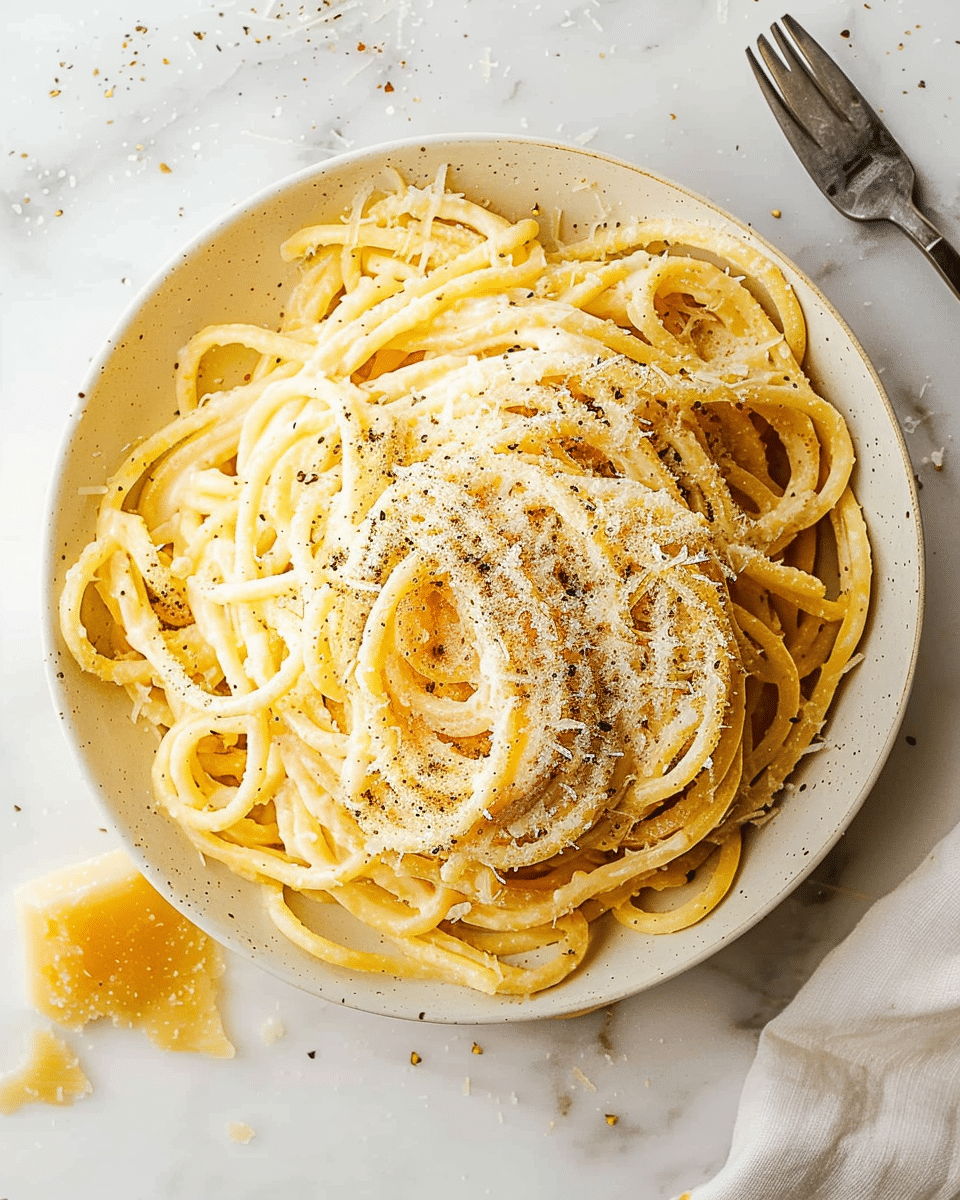
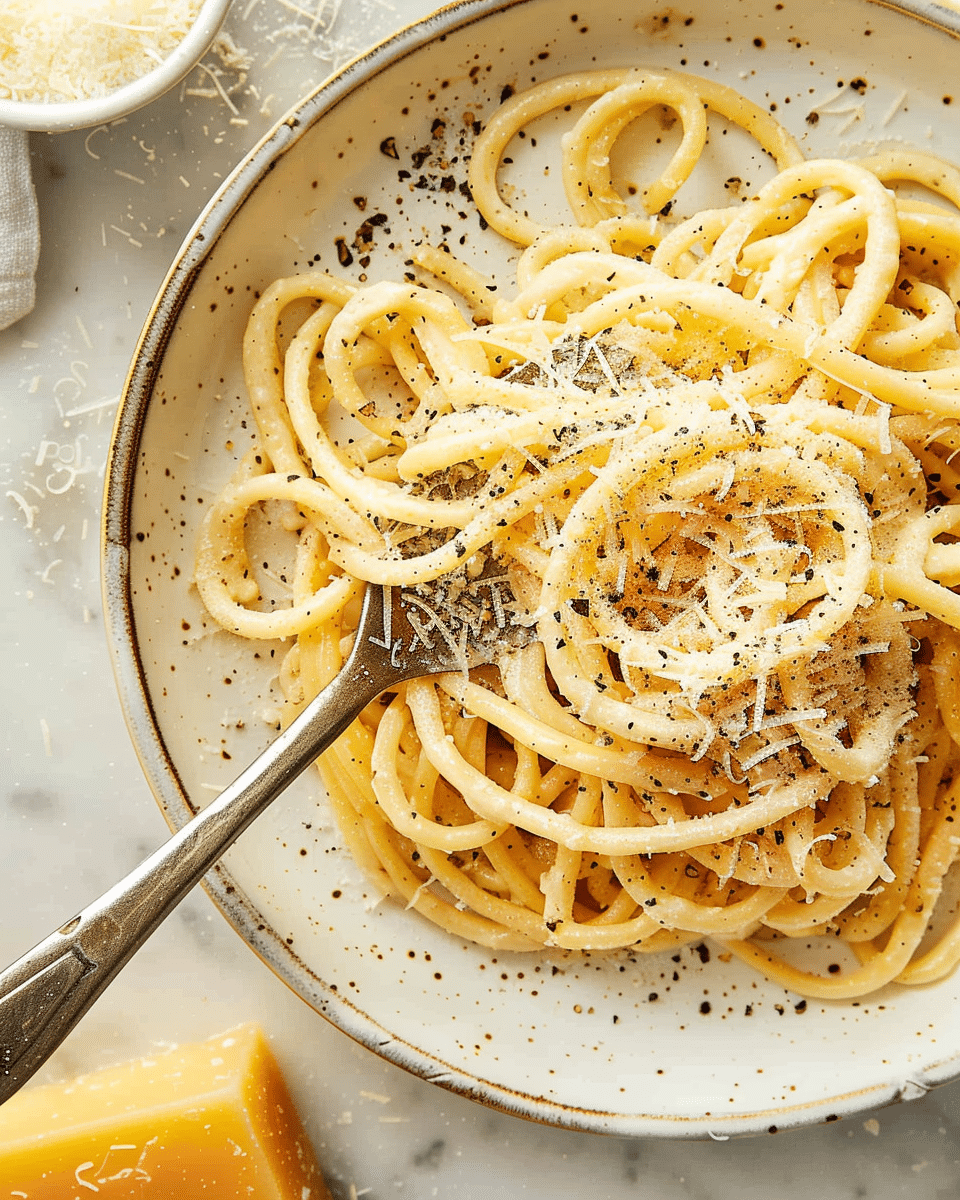
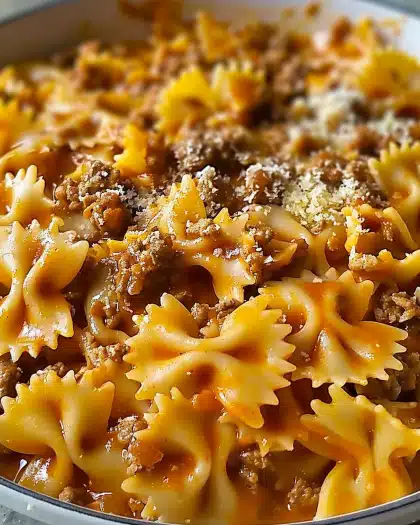
I love how easy and fast this recipe is—30 minutes and dinner is done. It’s elegant enough to serve guests, yet simple enough for a weeknight craving. With no heavy cream or extra ingredients, the creamy sauce forms naturally from the starchy pasta water, cheese, and butter. And since I usually have everything on hand, I can whip it up without any planning.
Ingredients
(Here’s a tip: Check out the full list of ingredients and measurements in the recipe card below.)
8 ounces uncooked pasta (I like using bucatini)
2 tablespoons butter, diced into chunks (optional but recommended)
1 teaspoon freshly-ground coarse black pepper
2 ounces finely-grated Pecorino-Romano cheese
Directions
I start by filling a large pot about halfway with water (about 3 quarts) and bringing it to a rolling boil. I salt the water generously—around 2 tablespoons of fine sea salt.
While the water heats, I melt the butter in a large nonstick sauté pan over medium heat. I add the freshly ground black pepper and let it cook for about 30 seconds. Then I turn off the heat (or move the pan off the burner if I’m using an electric stove) to keep it from getting too hot.
I cook the pasta until it’s just barely al dente. I don’t drain it—I use tongs to transfer the pasta directly into the pan with the butter and pepper.
I add about 1/3 cup of the starchy pasta water to the pan and give everything a quick toss to combine.
I sprinkle in half of the cheese and toss the pasta again, letting it melt into the sauce. Then I add the rest of the cheese, tossing until the sauce becomes glossy and smooth. If the sauce is too thick, I splash in more pasta water a tablespoon at a time.
I serve the pasta right away, topped with more Pecorino and extra pepper for a bolder finish.
Servings and timing
This recipe makes 2 to 3 servings and takes just 30 minutes—10 minutes to prep and 20 minutes to cook. It’s perfect for a quick lunch, dinner for two, or a classy solo meal.
Variations
Traditional version: I skip the butter entirely and just use extra starchy water for a more authentic version.
Different pasta shapes: While bucatini is classic, I sometimes use spaghetti, rigatoni, or even fettuccine—whatever I have on hand.
Lighter option: I reduce the butter or leave it out completely to cut back on richness.
Extra cheesy: I add a touch of Parmesan along with Pecorino for a slightly different depth of flavor.
Storage/Reheating
Cacio e Pepe is best served fresh, straight out of the pan. But if I have leftovers, I store them in an airtight container in the fridge for up to 2 days. To reheat, I add a splash of water and warm it gently on the stove while stirring constantly to bring the sauce back together.
I avoid microwaving, since the cheese can clump and separate more easily that way.
FAQs
Can I make this without butter?
Yes. I often skip the butter and just use starchy pasta water with the cheese and pepper. That’s the traditional method and still tastes amazing.
What cheese is best for Cacio e Pepe?
Pecorino Romano is the classic choice. It has a salty, sharp flavor that melts beautifully into the sauce.
Why isn’t my sauce creamy?
If the pasta water isn’t starchy enough or if the pan is too hot, the cheese might clump instead of melting smoothly. I always lower the heat, add the cheese gradually, and keep tossing until it’s glossy.
Can I use pre-ground pepper?
I get the best flavor from freshly ground coarse black pepper. Pre-ground can taste dull and overpowering, so I avoid it when I can.
What kind of pasta works best?
I prefer long noodles like bucatini or spaghetti because they hold the sauce well. But I’ve also used shorter shapes like rigatoni for a different texture.
Conclusion
Cacio e Pepe is one of my favorite dishes when I want something fast, flavorful, and satisfying. With just four ingredients and one pan, I get a creamy, peppery bowl of pasta that’s pure comfort food. It’s proof that the simplest recipes are often the most rewarding.