
Why You’ll Love This Recipe
I enjoy this recipe because it balances richness with brightness in a way that never feels heavy. The slow roasting allows the duck fat to render properly, giving me beautifully crisp skin, while the balsamic, honey, and lemon glaze adds a tangy sweetness that cuts through the richness. I also like that this recipe feels special enough for holidays or dinner parties, yet it uses simple ingredients and clear steps.
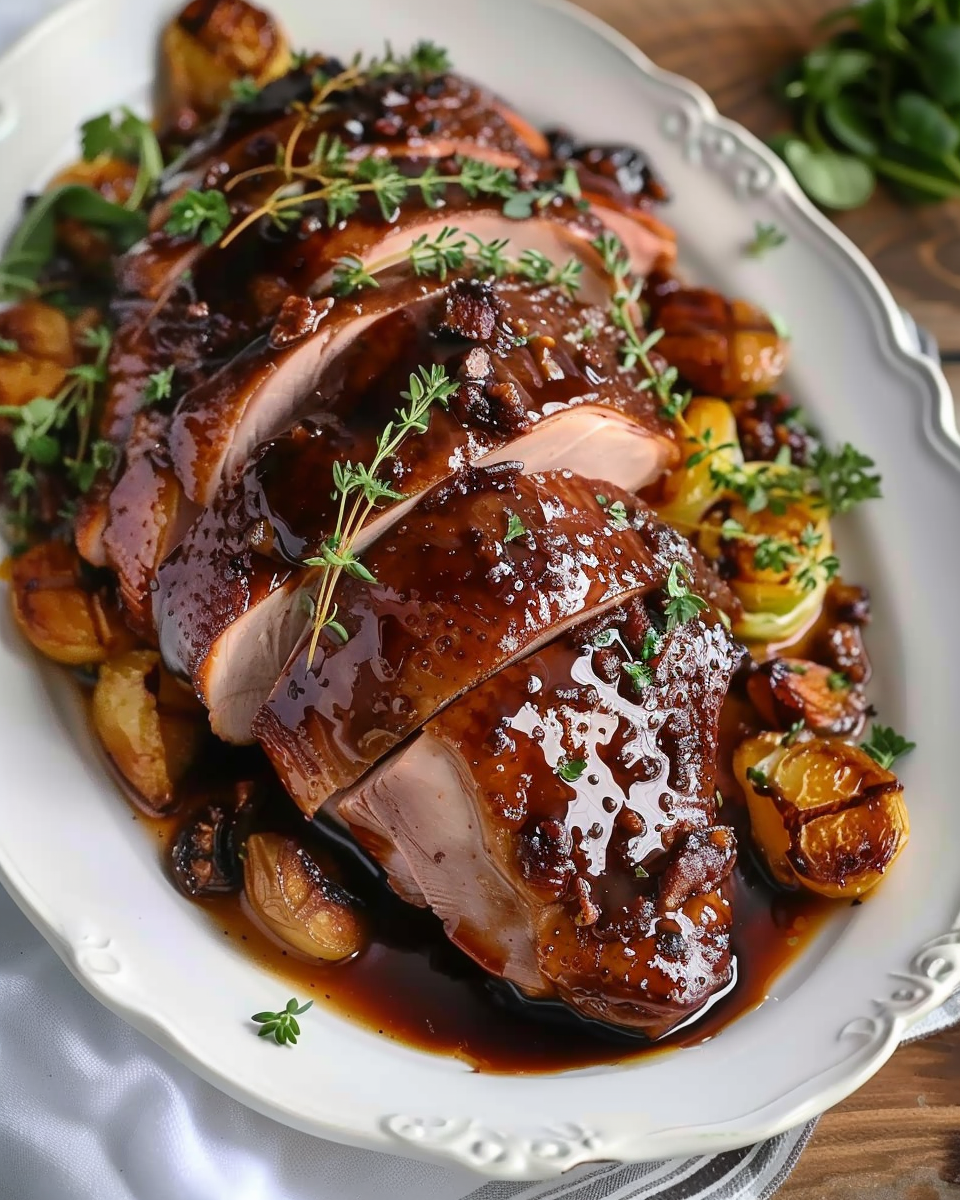 Ingredients
(Here’s a tip: Check out the full list of ingredients and measurements in the recipe card below.)
For the duck:
salt to taste (for seasoning inside and out)
6 lb whole Pekin duck
For the cavity:
5 garlic cloves, smashed
1 small lemon, halved
For the balsamic glaze:
1 fl oz fresh lemon juice
1/2 cup balsamic vinegar
1/4 cup honey
Directions
I start by taking the duck out of the refrigerator about 30 minutes before cooking so it can come to room temperature. While it rests, I preheat the oven to 350°F. I rinse the duck under cold water and pat it completely dry, since dry skin is key for crispiness. I score the skin in a crosshatch pattern without cutting into the meat and poke the fatty areas to help the fat render as it cooks. I season the duck generously inside and out with salt, stuff the cavity with garlic and lemon halves, and tie the legs together with kitchen twine.
I place the duck breast-side up on a roasting pan and roast it for 40 minutes. After that, I carefully flip it breast-side down and continue roasting for another 20 to 40 minutes, until the thickest part of the thigh reaches about 140°F. I find that flipping helps the duck brown more evenly.
While the duck roasts, I whisk together the balsamic vinegar, lemon juice, and honey to make the glaze. When the duck reaches temperature, I remove it from the pan, pour off the rendered fat into a separate bowl, and wipe out the pan so nothing burns.
I return the duck to the pan breast-side up and brush it generously with the glaze. I roast it for another 20 minutes, brushing every 10 minutes at first and then every 5 minutes near the end to build a deep, glossy coating. I cook until the internal temperature reaches about 155°F. If I want extra crisp skin, I finish it briefly under the broiler while keeping a close eye on it.
Once done, I let the duck rest for 15 minutes before carving. This step always gives me juicier, more tender meat. I remove the aromatics from the cavity, carve, and serve while the glaze is still warm.
Servings and Timing
I get about 4 servings from this recipe.
Prep time is approximately 1 hour and 15 minutes.
Cook time is about 2 hours and 30 minutes.
Total time comes to roughly 3 hours and 45 minutes.
Variations
I sometimes add fresh herbs like thyme or rosemary to the cavity for a more aromatic flavor. When I want a slightly sweeter glaze, I replace part of the honey with maple syrup. For a deeper, savory edge, I like adding a splash of soy sauce to the glaze.
Storage/Reheating
I store leftover duck in an airtight container in the refrigerator for up to 3 days. When reheating, I prefer using the oven at a low temperature to help keep the meat moist and re-crisp the skin. I avoid the microwave when possible, since it softens the skin.
FAQs
Can I make this recipe ahead of time?
I usually roast the duck fresh, but I can prepare the glaze a day in advance and store it in the refrigerator.
How do I know when the duck is fully cooked?
I rely on a meat thermometer and remove the duck when it reaches about 155°F internally after glazing.
What can I do with the leftover duck fat?
I always save it because it’s perfect for roasting potatoes, vegetables, or even frying eggs.
Can I use a different type of vinegar?
I’ve tried other vinegars, but aged balsamic gives me the best depth and sweetness for this dish.
Why is resting the duck important?
I rest the duck so the juices redistribute, which keeps the meat tender and prevents it from drying out.
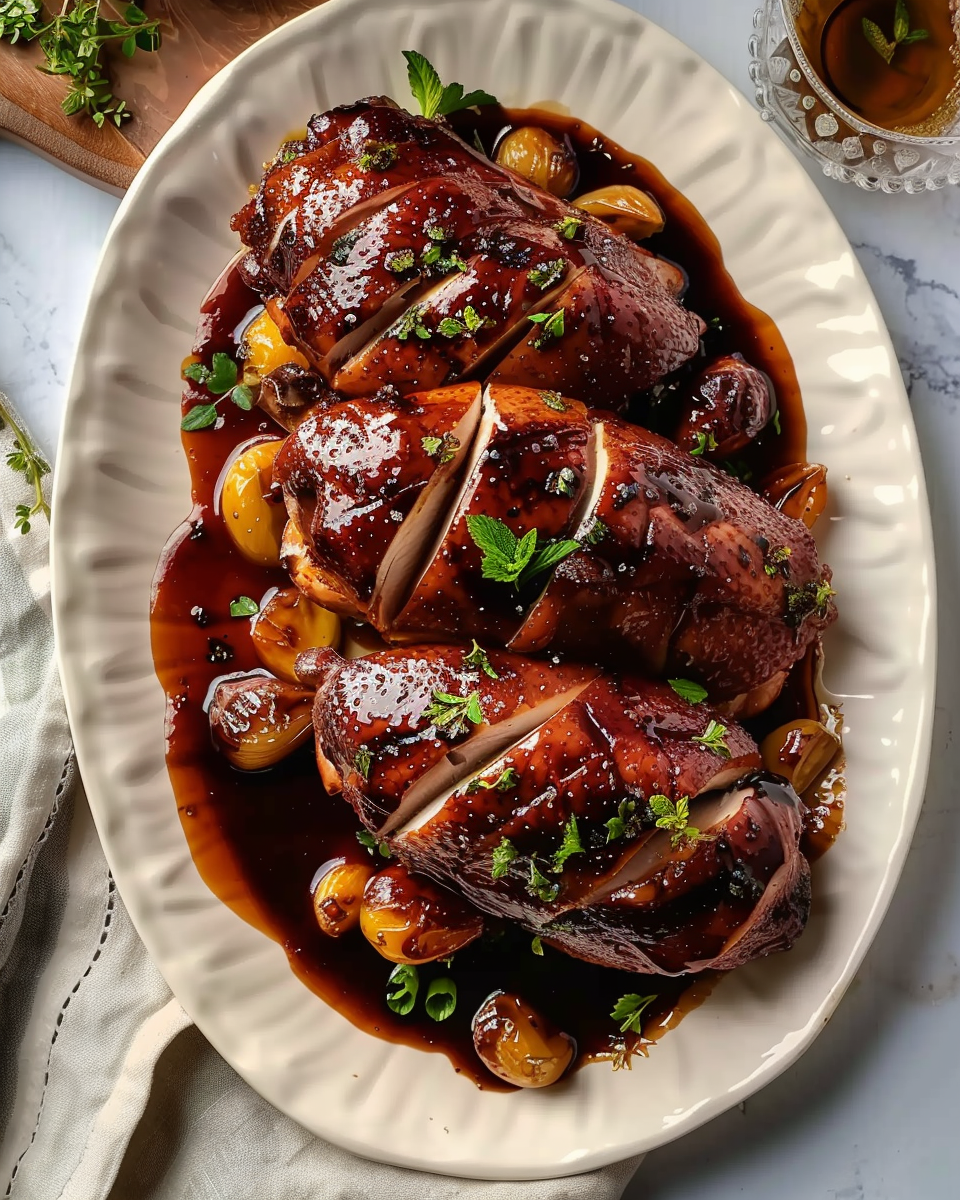 Conclusion
I find this Classic Balsamic Glazed Duck to be a rewarding dish that delivers big flavor and impressive presentation. With careful roasting and a simple glaze, I get crispy skin, juicy meat, and a beautifully balanced finish that always makes the meal feel special.
Print
Classic Balsamic Glazed Duck
- Total Time: 3 hours 45 minutes
- Yield: 4 servings
- Diet: Gluten Free
Description
This classic balsamic glazed duck is slow roasted to perfection with crispy skin and a rich honey balsamic glaze, making it a timeless centerpiece for elegant dinners and special occasions.
Ingredients
For the Duck
Salt, to taste (for seasoning inside and out)
6 lb whole Pekin duck
For the Cavity
5 garlic cloves, smashed
1 small lemon, halved
For the Balsamic Glaze
1 fl oz fresh lemon juice
½ cup balsamic vinegar (aged preferred)
¼ cup honey
Instructions
Remove the duck from the refrigerator 30 minutes before cooking to bring it to room temperature. Preheat the oven to 350°F (175°C). Rinse the duck under cold water and pat completely dry with paper towels—dry skin is essential for crispiness.
Using a sharp knife, score the duck skin in a shallow crosshatch pattern, being careful not to cut into the meat. Prick the fatty areas several times to help render the fat. Season generously with salt inside and out. Stuff the cavity with smashed garlic cloves and lemon halves. Tie the legs together with kitchen twine.
Place the duck breast-side up on a roasting rack set in a roasting pan. Roast for 40 minutes. Flip the duck breast-side down and continue roasting for 20–40 minutes, until the thickest part of the thigh reaches 140°F (60°C).
While the duck roasts, whisk together the balsamic vinegar, lemon juice, and honey until smooth. Set aside.
Remove the duck from the oven and transfer it to a cutting board. Carefully pour off the rendered duck fat into a heatproof container (save for later use). Wipe the roasting pan clean.
Return the duck to the pan, breast-side up, and brush generously with the balsamic glaze. Roast for 20 minutes, brushing every 10 minutes. Continue roasting and brushing every 5 minutes for another 20 minutes, until the internal temperature reaches 155°F (68°C) and the glaze is caramelized and glossy. Broil for 5–10 minutes if extra crisp skin is desired (watch closely).
Remove the duck from the oven and rest for 15 minutes. Discard the garlic and lemon, carve, and serve immediately.
Notes
Saving rendered duck fat is highly recommended—it’s excellent for roasting potatoes or vegetables.
Letting the duck rest ensures juicy meat and easier carving.
For best results, use aged balsamic vinegar for deeper flavor and natural sweetness.
- Prep Time: 1 hour 15 minutes
- Cook Time: 2 hours 30 minutes
- Category: Main Course
- Method: Roasting
- Cuisine: French-inspired / European