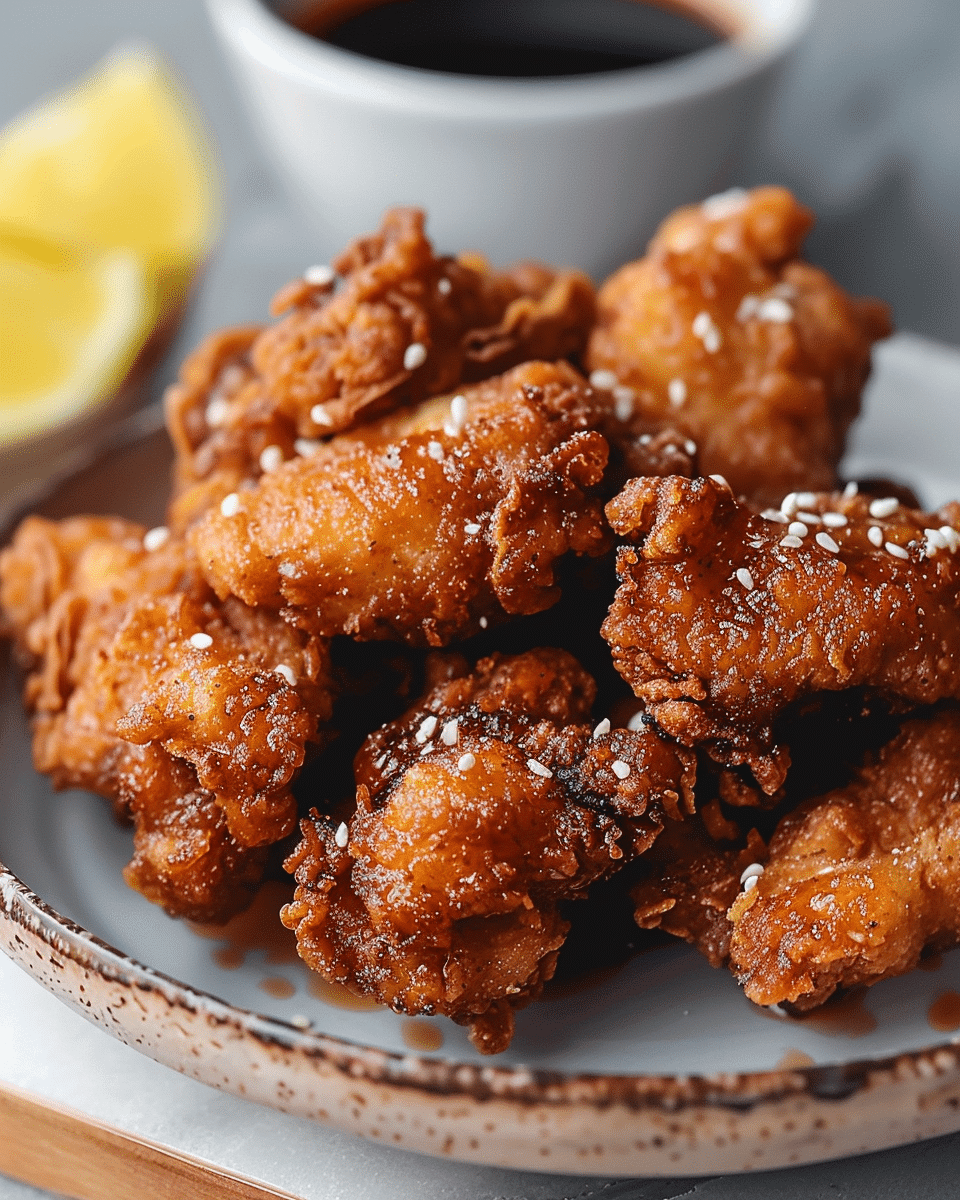
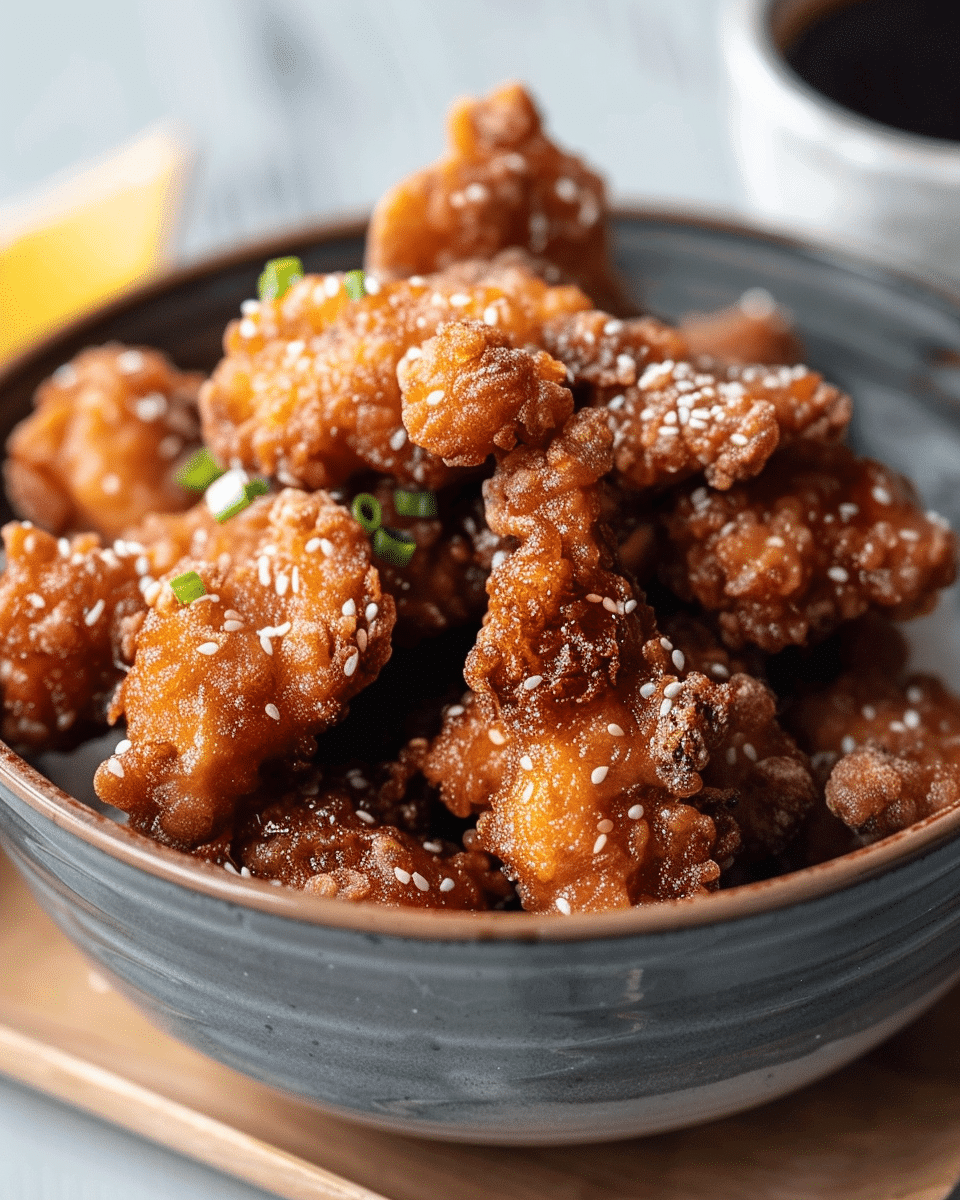
I love how Karaage Chicken combines the bold, savory flavors of Japanese cooking with that satisfying crunch of perfectly fried chicken. It’s easy to make at home, and the marinade does most of the flavor work for me. I often serve it as an appetizer, a snack, or even a main dish with rice and pickles. And if I’m cooking for a group, it’s always a hit—crispy, juicy chicken never goes out of style.
Ingredients
(Here’s a tip: Check out the full list of ingredients and measurements in the recipe card below.)
1 clove garlic, finely grated
1 tablespoon finely grated fresh ginger
3 tablespoons soy sauce
3 tablespoons sake
1 tablespoon mirin
⅛ teaspoon sesame oil
¼ teaspoon ground black pepper
1 pinch cayenne pepper
½ teaspoon white sugar
¼ teaspoon kosher salt
1¼ pounds boneless skinless chicken thighs, cut into 2-inch pieces
1 cup potato starch
1 quart canola oil (or as needed for deep frying)
Directions
I start by mixing the soy sauce, sake, mirin, ginger, garlic, sesame oil, black pepper, cayenne, sugar, and salt in a bowl to make the marinade.
I add the chicken pieces to the bowl, making sure they’re well coated, and marinate for at least 30 minutes in the refrigerator.
While the chicken marinates, I heat about 1 quart of canola oil in a deep frying pan or wok over medium-high heat.
When ready to fry, I dredge each piece of marinated chicken in potato starch, pressing lightly to ensure it sticks well.
I fry the chicken in batches for 4–5 minutes, turning occasionally until golden brown and crispy.
I remove the pieces with a slotted spoon and place them on paper towels to drain excess oil.
I serve it hot, sometimes with a sprinkle of sea salt or lemon zest, and pair it with a side salad or chilled tea.
Servings and timing
This recipe serves 4 people.
Prep time: 15 minutes
Marinating time: 30 minutes
Cook time: 15 minutes
Total time: 1 hour
Variations
Citrus twist: I like adding a splash of yuzu juice or lemon zest to the marinade for a refreshing zing.
Double-coat method: For extra crunch, I coat the chicken twice in potato starch before frying.
Spicy version: Sometimes I mix in a little shichimi togarashi for smoky heat without overpowering the flavor.
Dipping sauces: I love serving karaage with wasabi mayo or ponzu sauce instead of the usual soy-based dips.
Different cuts: I occasionally swap thighs for wings or drumettes for fun, finger-friendly versions.
Overnight marinade: When I have time, I marinate the chicken overnight for deeper flavor.
Toasted sesame seeds: Sprinkling these over the top adds a nice crunch and nutty aroma.
Storage/Reheating
I store leftover karaage in an airtight container in the fridge for up to 3 days. To keep it crispy when reheating, I prefer using a skillet over medium heat or the oven at 350°F until it’s hot and crunchy again. Microwaving is faster, but the texture softens.
For longer storage, I freeze the cooked chicken on a tray, then transfer it to a freezer bag once frozen. It reheats best in the oven or air fryer straight from frozen.
FAQs
What’s the difference between karaage and regular fried chicken?
Karaage uses a soy-based marinade and potato starch coating, which gives it a lighter, crispier texture compared to traditional flour or batter-coated fried chicken.
Can I use chicken breast instead of thighs?
Yes, I sometimes use chicken breast, but I prefer thighs because they stay juicier during frying. Just be careful not to overcook if using breast meat.
Is potato starch necessary?
Potato starch gives the chicken its signature crispiness, but if I don’t have it, I use cornstarch as a backup—though the texture will be slightly different.
How do I know when the oil is ready?
I usually test by dropping a small piece of starch into the oil—it should bubble and rise immediately. A thermometer reading of 350°F is ideal.
Can I air-fry this instead of deep frying?
Yes, I occasionally air-fry karaage at 390°F for about 12–15 minutes, flipping halfway through. It doesn’t get quite as crispy, but it’s still delicious.
Conclusion
Karaage Chicken is one of those recipes I always keep in my rotation. It’s simple, full of flavor, and incredibly satisfying. Whether I’m serving it as a party appetizer or a quick dinner, the crispy texture and rich marinade always impress. With a few easy steps and basic ingredients, I get that authentic Japanese street food flavor right at home.
This Japanese-style fried chicken is crispy on the outside, juicy on the inside, and packed with umami. A quick marinade and deep-fry bring bold flavor in every bite.
Ingredients
Marinade:
1 clove garlic, finely grated
1 tbsp finely grated fresh ginger
3 tbsp soy sauce
3 tbsp sake
1 tbsp mirin
⅛ tsp sesame oil
¼ tsp ground black pepper
1 pinch cayenne pepper
½ tsp white sugar
¼ tsp kosher salt
Chicken:
1¼ lbs boneless skinless chicken thighs, cut into 2-inch pieces
For Coating and Frying:
1 cup potato starch
1 quart canola oil (or as needed for frying)
Optional Garnishes:
Sea salt or lemon zest
Toasted sesame seeds
Instructions
In a mixing bowl, combine soy sauce, sake, mirin, ginger, garlic, sesame oil, pepper, cayenne, sugar, and salt.
Add the chicken pieces and mix well. Let marinate for at least 30 minutes (or overnight for deeper flavor).
Heat canola oil in a deep pan or wok over medium-high heat (350–375°F).
Dredge marinated chicken in potato starch until evenly coated.
Fry the chicken in batches for 4–5 minutes each, turning occasionally until golden brown and crispy.
Use a slotted spoon or spider strainer to remove the chicken and drain on paper towels.
Optional: Sprinkle with sea salt, lemon zest, or sesame seeds before serving.
Serve hot with sides like cucumber salad or iced tea.
Notes
Double-Coating Trick: For extra crunch, coat chicken in potato starch twice.
Flavor Twist: Add a splash of yuzu or lemon juice to the marinade.
Spicy Option: Mix in shichimi togarashi for added depth and heat.
Serving Ideas: Serve with wasabi mayo, ponzu sauce, or over rice for a full meal.
Storage: Keep leftovers in the fridge up to 3 days. Reheat in the oven at 350°F to retain crispiness.